Construction Tender Risk Analysis: How to Identify Costly Project Risks Before Bidding
 BoqCalc Team
Winning construction projects isn't just about submitting the lowest bid.
Many contractors lose money because hidden project risks were overlooked during the tendering process. Missing specifications, incomplete documentation, unrealistic timelines, and inaccurate quantities can turn a profitable project into a financial disaster.
This is why construction tender risk analysis has become one of the most important stages of modern bid preparation.
In this guide, we'll explore how contractors can identify hidden risks before bidding and how AI-powered tools are transforming risk assessment in construction.
What Is Construction Tender Risk Analysis?
Construction tender risk analysis is the process of evaluating potential risks within project documentation before submitting a bid.
The goal is to identify issues that may impact:
- Project costs
- Construction schedules
- Resource planning
- Cash flow
- Profitability
- Contract obligations
Effective risk analysis helps contractors understand where potential problems may arise and adjust pricing accordingly.
Why Tender Risk Analysis Matters
Many construction companies focus heavily on cost estimation while spending very little time evaluating project risk.
This creates several problems:
Underpriced Bids
Contractors may unknowingly exclude important work items.
Budget Overruns
Unexpected requirements often emerge after project award.
Schedule Delays
Incomplete documentation can result in construction delays and rework.
Reduced Profit Margins
Even small risk factors can significantly impact project profitability.
According to industry reports, poor risk management remains one of the leading causes of construction disputes and cost overruns.
Common Risks Hidden Inside Tender Documentation
Missing Specifications
Project documents often contain references to specifications that are missing or incomplete.
Examples include:
- Waterproofing details
- Fire protection requirements
- MEP coordination information
- Material performance standards
These omissions can create substantial additional costs later.
Quantity Errors
BOQ documents sometimes contain:
- Duplicate items
- Missing quantities
- Incorrect units
- Outdated revisions
This can directly affect bid accuracy.
Unrealistic Construction Schedules
Aggressive timelines may require:
- Additional labor
- Overtime costs
- Multiple shifts
- Increased equipment usage
These costs are often overlooked during bidding.
Design Coordination Issues
Conflicts between drawings and specifications frequently create expensive variations during construction.
Traditional Risk Analysis Challenges
Historically, contractors reviewed tender documentation manually.
The process often involves:
- Reviewing drawings
- Checking specifications
- Comparing BOQ quantities
- Identifying assumptions
- Creating contingency plans
For large projects this process can take days.
Unfortunately, human reviewers can miss critical details, especially when hundreds of pages of documentation are involved.
How AI Improves Construction Tender Risk Analysis
Artificial intelligence is changing how contractors identify project risks.
Modern AI systems can analyze:
- Bills of quantities
- Technical specifications
- Tender documents
- Project schedules
- Historical project data
Within minutes.
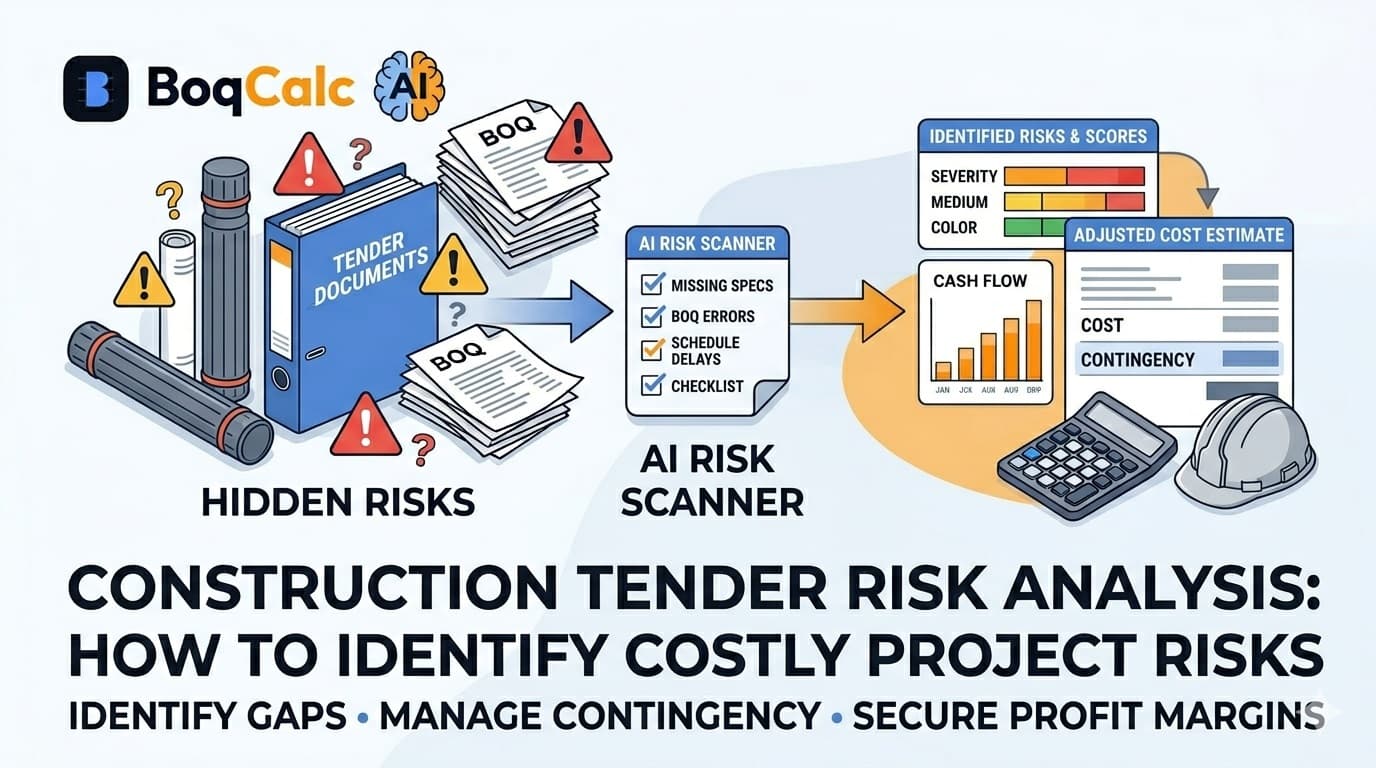
Automated Risk Detection
AI can identify:
- Missing specification references
- Scope gaps
- Quantity inconsistencies
- Documentation conflicts
This allows estimators to focus on decision-making rather than document review.
Pattern Recognition
Machine learning models can detect risk patterns based on previous projects and historical outcomes.
Faster Decision Making
Instead of spending days reviewing documents, contractors can receive risk insights in less than an hour.
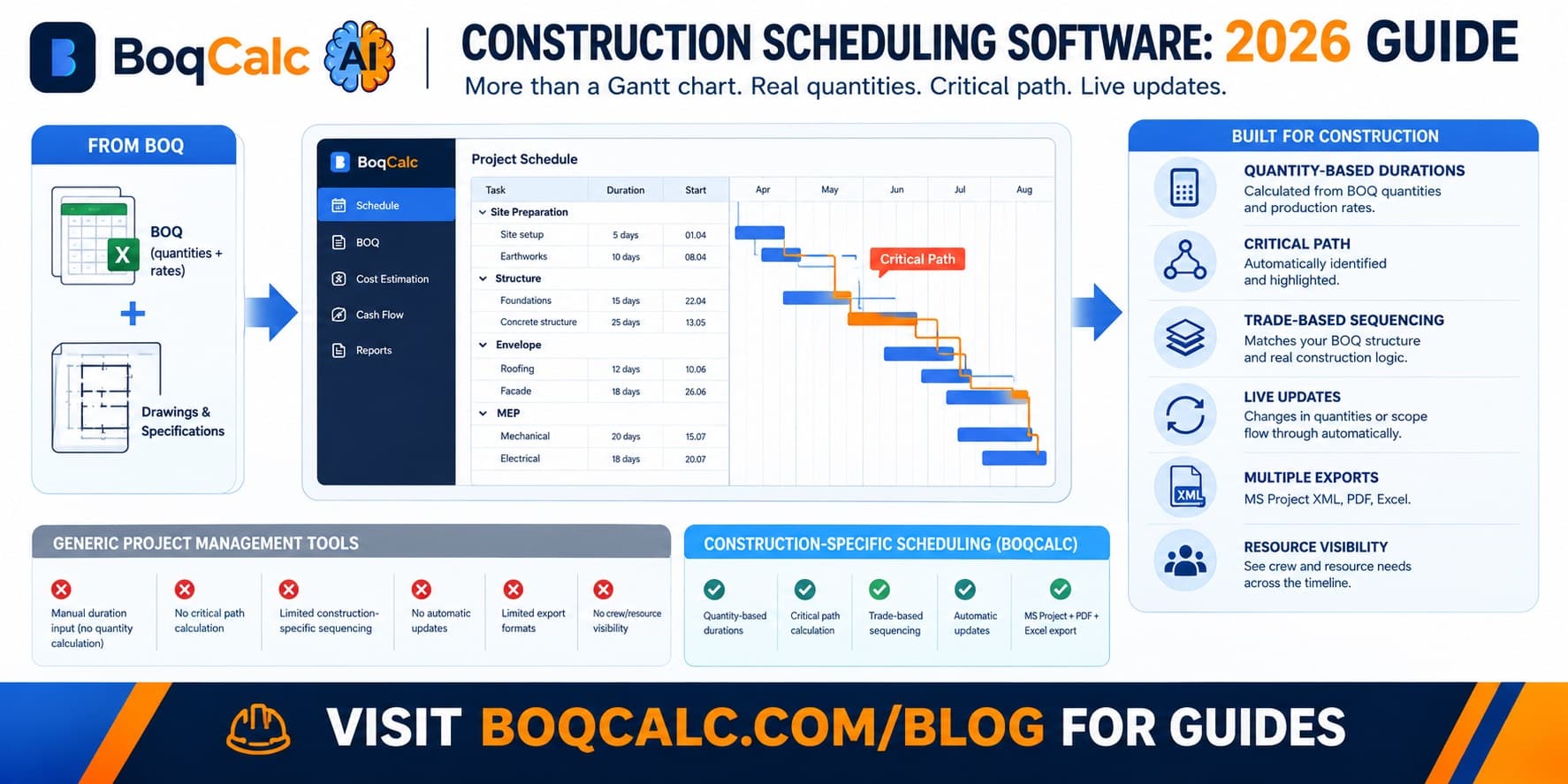
Risk Analysis and Cost Estimation Work Together
Risk analysis should never be treated as a separate activity.
The best results occur when:
- Cost estimation
- Schedule planning
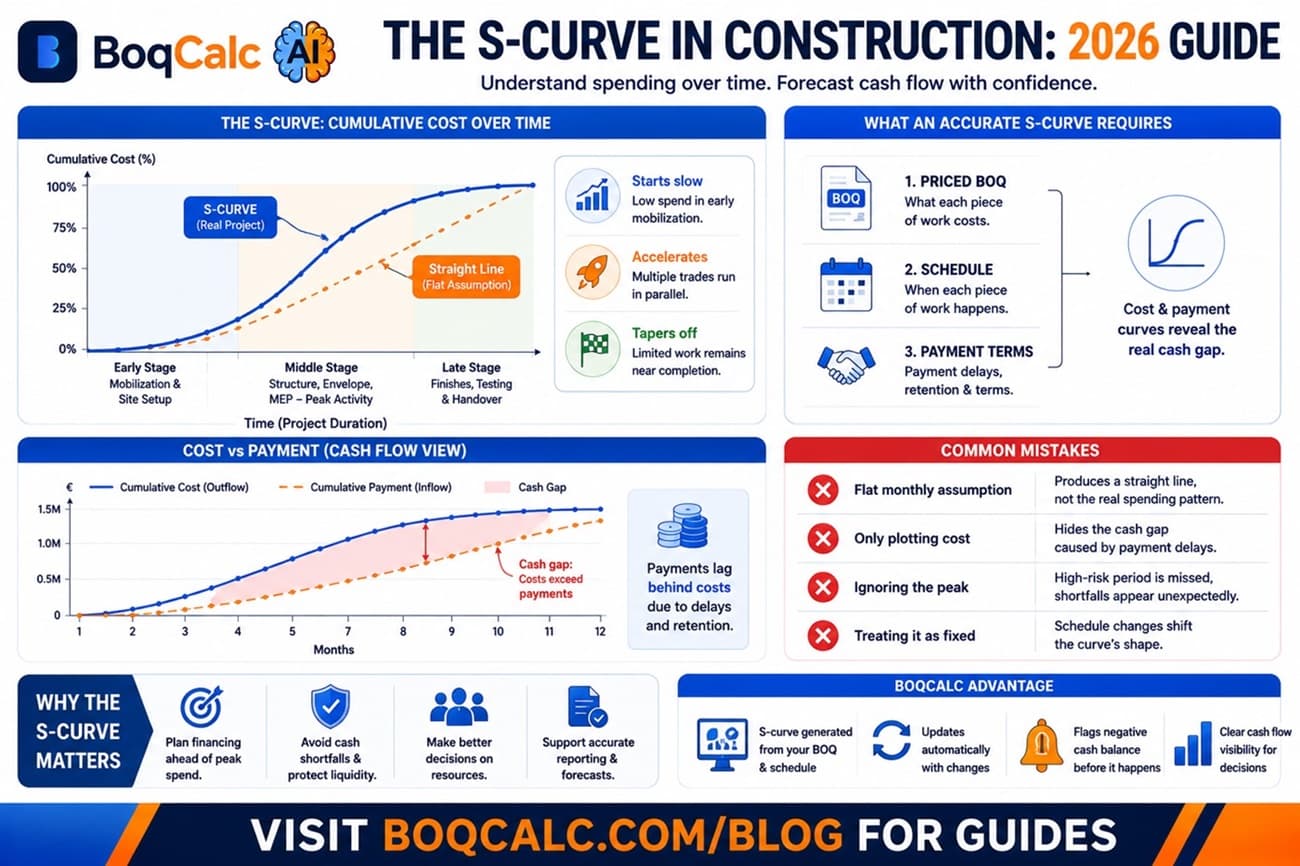
- Cash flow forecasting
- Risk analysis
are integrated into a single workflow.
This approach allows contractors to submit more accurate and profitable bids.
For a broader overview of AI-driven estimating, read our guide on:
AI BOQ Estimation: How Contractors Save 80% Time Using Automation
Key Risk Indicators Every Contractor Should Check
Before submitting a tender, review:
Documentation Completeness
- Are all specifications included?
- Are drawing revisions current?
- Are referenced documents available?
BOQ Consistency
- Do quantities match drawings?
- Are units correct?
- Are trade packages complete?
Schedule Feasibility
- Are milestones realistic?
- Is resource allocation achievable?
Financial Risks
- Material price volatility
- Long procurement lead times
- Cash flow constraints
Contract Risks
- Liquidated damages
- Warranty obligations
- Payment terms
Manual vs AI Tender Risk Analysis
| Feature | Manual Review | AI Risk Analysis |
|---|---|---|
| Speed | Slow | Fast |
| Scalability | Limited | High |
| Error Detection | Moderate | Advanced |
| Documentation Coverage | Partial | Comprehensive |
| Consistency | Variable | Standardized |
The Future of Construction Risk Management
As construction projects become increasingly complex, AI-powered risk analysis will become a standard part of bid preparation.
Future systems will likely provide:
- Predictive risk scoring
- BIM-integrated risk detection
- Real-time supplier risk analysis
- Automated contingency recommendations
Contractors who adopt these technologies early will gain a significant competitive advantage.
Frequently Asked Questions
What is construction tender risk analysis?
Construction tender risk analysis identifies potential project risks before a contractor submits a bid.
Why is risk analysis important in construction?
It helps contractors avoid hidden costs, reduce budget overruns, and improve project profitability.
Can AI identify risks in BOQ documents?
Yes. Modern AI systems can detect quantity inconsistencies, scope gaps, and missing specifications automatically.
How long does risk analysis take?
Traditional reviews may require several days, while AI-powered platforms can complete the process within minutes.
Does risk analysis improve bid accuracy?
Yes. Identifying risks early allows contractors to price projects more accurately and reduce unexpected costs.
Conclusion
The most successful contractors don't just estimate costs. They identify risks before competitors even notice them.
Construction tender risk analysis helps prevent costly mistakes, improve bid accuracy, and protect profit margins.
As AI technology continues to evolve, contractors who combine risk analysis with automated cost estimation will be better positioned to win profitable projects and scale their businesses.
BoqCalc Team
From the BoqCalc team
Ready to price your next BOQ?
4 free credits, no credit card. Upload a BOQ and see the cost estimate, risk analysis, schedule, and cash flow for yourself.
Try BoqCalc free →